
Namaste!
The yearly half-marathon by Blogchatter is back. I tend to stick to poems because they are easier to write. This time, I wanted to try something different. Though the event doesn’t require a theme, there’s no reason I shouldn’t have one.
Telugu Songs Lyrics
Telugu music has been a part of my life since I was a baby. While I enjoyed the music first and then the lyrics, in the last few years I actually focused on what makes Telugu melodies so memorable. It’s not just the tune, though we have had some marvelous music directors. It’s how the lyrics weave the tune. The lyricists played with words, meter, and rhyme scheme. Then the singers give the words a new life by adding the required emotions, stress, and intonation.
With this, I present my theme for the half-marathon: exploring a few of my favorite Telugu songs for their lyrical smarts.
And guess what? I actually planned this as a Medium series (Learning to Love my Language) three years ago, before life did what it often did, and I let it go. Maybe I can revive it on the website.
(I’ll paste the same introduction for all seven posts.)
Today’s Song: Shiva Pooja
- Movie: Swarna Kamalam (1988)
- Director: K. Viswanath
- Music Director: Ilayaraja
- Lyricist: Sirivennela Seetharama Sastry
- Singers: S. P. Balasubramaniam, Susheela
I thought of repurposing the post I made for my favorite song from the same movie. However, I decided on this one instead. Why do the same one when every song has something to say?
The song highlights the contrast in the main characters’ perspectives. The hero understands the importance of nurturing and protecting traditional art forms in a rapidly changing world. The heroine represents the modern woman who wants nothing to do with her ancestral knowledge but yearns for a better life. Neither is wrong. But neither is fully right. The right solution is a balance of both. Be modern, but honor your ancient art.
The man’s lyrics emphasize art, divinity, and culture. The woman’s lyrics point out why she craves to fly like a free bird.
- Shiva Poojaku Chivurinchna Siri Siri Muvva – the glorious anklet bell that blooms for Shiva’s pooja
- Shiva Poojaku Chivurinchna Siri Siri Muvva
- Siri Siri Muvva… Siri Siri Muvva – this refrain runs throughout the song
- Mrudhumanjula Padha Manjari Poochina Puvvaa – the tender music of the cluster of flowering footsteps
- Siri Siri Muvva Siri Siri Muvva
- Yathirajukku Jathi Swaramula Parimalamivva – why don’t you offer the scent of music and beats to the king of ascetics
- Siri Siri Muvva Siri Siri Muvva
- Natanaanjalitho Brathukunu Tharinchaneeva – why don’t you fulfill life with a heartfelt offering of dance
- Siri Siri Muvva… Siri Siri Muvva
Here, the heroine takes over. You can see the force of opinion in the rush of words. It’s heady, freeing, and rebellious.
- Parugaapaka Payanichave Thalapula Naava – don’t stop your run; continue to float on, my boat of thoughts and feelings
- Kerataalaku Thalavanchithe Taragadhu Throva – you cannot go on if you bow down to the high waves (which can be scary)
- Edhirinchina Sudigaalini Jayinchinaava – did you defeat the tornado that you had to face head-on
- Madhi Korina Madhu Seemalu Varinchi Raava – why don’t you accept and come to the beautiful, nectar-filled lands your heart yearns for
I came across this little video where the lyricist himself explains a stanza in the song. He didn’t just string words together. He mirrored the characters and gave them depth. As he says, the entire song is filled with dance-based movements. Yet from two contrasting perspectives.
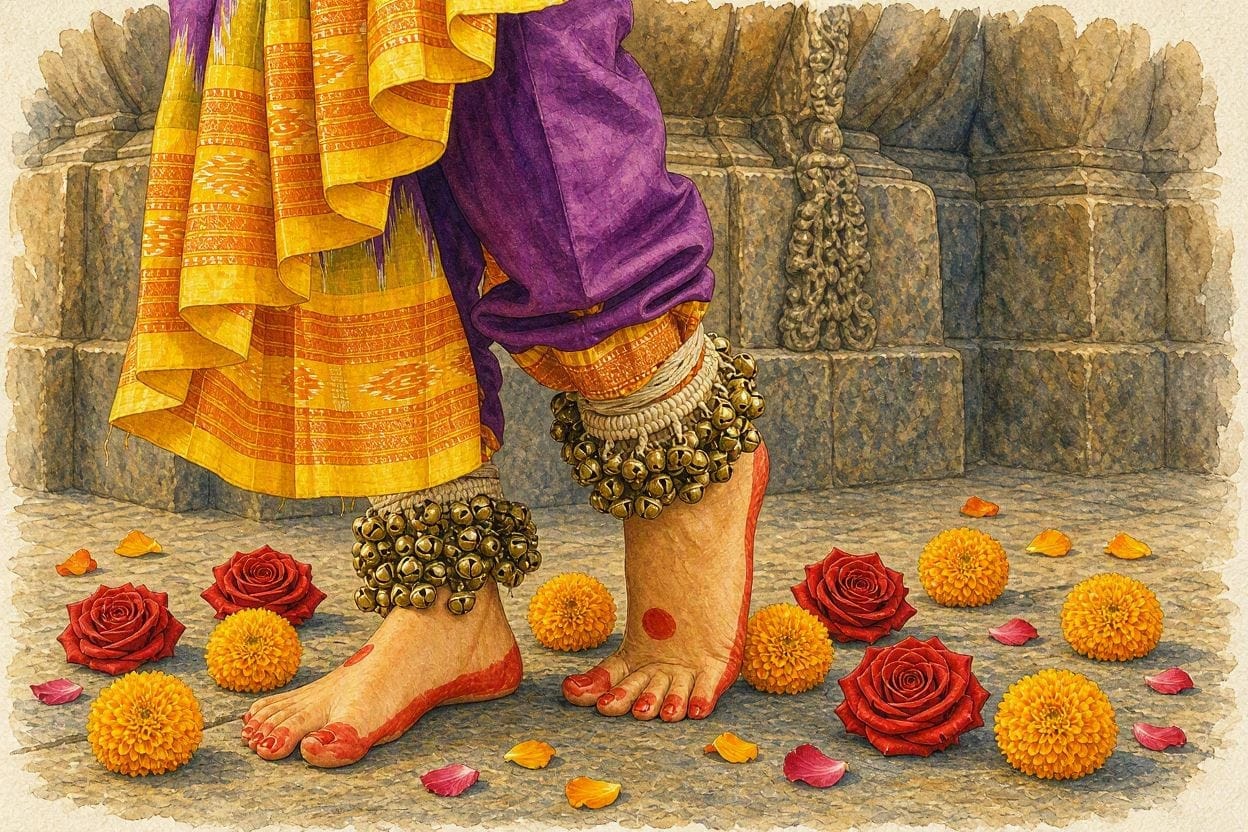
The use of Shiva is important here. He is also Nataraj, the God of Dance. The symbolism is marvelous. Anklet bells are like divine flowers to worship the God of dance.
The use of Siri Siri Muvva as a refrain establishes that anklets are not just jewelry. You don’t wear them to look good or because the tinkling bells are pleasing to hear. They are precious, glorious, divine, and prosperous. Meaning: what you think of shackles (in this case) is not just a means to be closer to the divine, but also a ticket to fame and prosperity.
He circles to Shiva again, this time referring to him as the king or the first/best of ascetics, and asks if she wouldn’t offer her dance (and devotion) to the divine. Yati and Jathi also rhyme. Jathi is the rhythmic pattern in classical dance, the recurring sequence of footsteps that are music in themselves. However, the lyricist brings a third sensory element here. He adds parimalam (scent) as another dimension to music and dance. This ties in with the anklets being flowers offered to Shiva.
Then comes her perspective. She is a rebel and is very vocal about it. That’s what makes her character so strong yet vulnerable. The first line alliterates the first two words. The second line alliterates the second and third words. All the end words rhyme, and the fourth line has internal rhyme.
Meaning-wise, she is all about fast movement, frenzied energy, and a brimming desire to rush to new pastures. Face the waves, fight the tornado, don’t surrender, don’t give up, don’t settle. She is all action and movement… which is also a part of dance.
Ultimately, that’s what the lyricist points out. Dance is in her blood. She is dance. Dance is her.