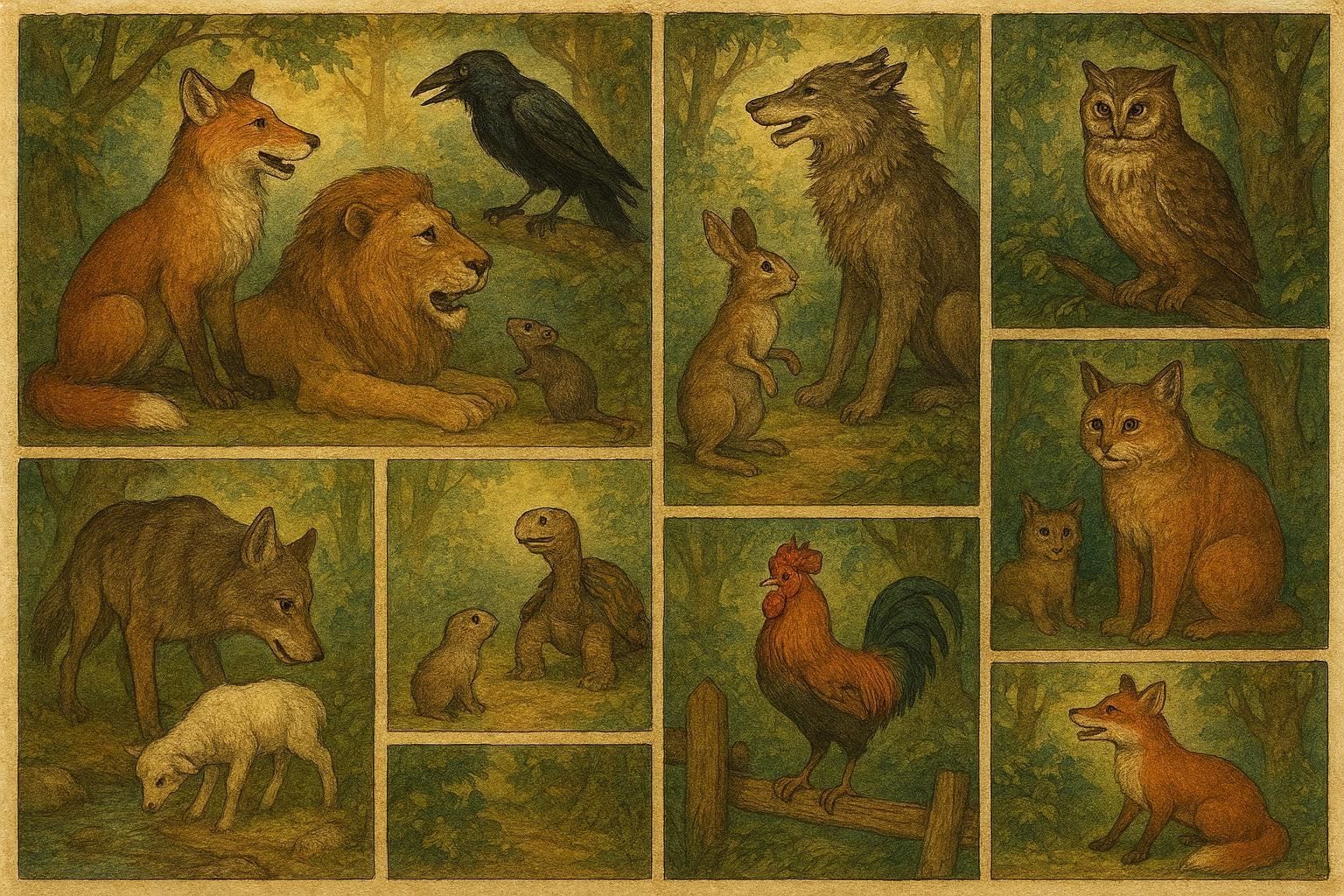

Talking animals in fiction are not a new phenomenon. Think of the Panchatantra compiled by Vishnu Sharma or the Jataka Tales in Buddhism. The animal kingdom has heroes, heroines, and villains. Nature’s elements can talk, fight, and laugh. They teach valuable lessons, talk to each other and to humans, and explore various themes usually associated with human society. Anthropomorphism is a popular writing trope with a centuries-long history.
Even today, children’s fiction, graphic novels, fantasy, and dystopian genres employ this trope to enhance readers’ experience. The famous classics, Animal Farm by George Orwell and Winnie the Pooh by A. A. Milne, are examples of this trope in books and movies. Writers rely on anthropomorphism to share moral lessons without preaching, to make dark truths more palatable, or to engage kids by using interesting characters.
What Is Anthropomorphism?
Anthropomorphism is the art of attributing human traits to non-humans. It is different from personification, but shares enough similarities that they can be confusing at times. Anthropomorphism is not limited to animals. It extends to all non-human creatures, such as birds, insects, plants, etc. Even non-living objects (keys, tables, cars, machines) and nature’s creations (stars, snowflakes, sun) can be anthropomorphized by giving them a voice and unique characteristics.
While anthropomorphism has been integral to children’s fiction, it is not limited to kids. Adult fiction, especially fantasy, paranormal, supernatural, dystopian, etc., can employ this trope in varied ways. Anthropomorphism works because the message is sometimes more impactful when it comes from a non-human. It is also why readers love this trope. Life lessons become easier to discuss with kids when you use non-human characters.
What Is the Difference Between Anthropomorphism and Personification?
Anthropomorphism is different from personification in a critical aspect. Personification is where non-human beings, objects, and even phenomena are given human-like traits metaphorically and as a representation. It is a figurative attribution rather than a literal one.
So, while personification says the door was angry, it does not mean the door experiences human emotions like anger. It implies the door probably shut with a loud bang, knocked into the wall, or swung back at the person in an expected move. In anthropomorphism, if a door is angry, it means that the door indeed has human emotions and is conveying them through words and actions.
Key Features of the Trope
Writing tropes can be explained by their key features, which highlight the themes of their effective use in fiction. In anthropomorphism, the key features are as follows:
Human-like Non-Human Characters: Emotions, intentions, behavior, etc., typically seen in humans, are attributed to other beings, objects, and phenomena.
Exploring Human Themes: Love, loss, jealousy, anger, greed, etc., are discussed using non-humans, thus enabling readers to understand the core emotions easily.
Values and Life Lessons: Teaching ethical and moral values by discussing concepts like truthfulness, honesty, justice, morality, and so on.
Relatability and Complexity: Allowing readers to relate to the emotions and situations, but from a comfortable distance (between humans and non-humans).
Social Commentary: Expose injustice, power imbalance, hypocrisy, and complex societal situations using humor, satire, and non-human characters.
Why the Anthropomorphism Trope Works
Anthropomorphism as a trope works due to many reasons. On the surface, it provides entertainment. When you peel the layers, it presents the complexities of life using simple situations. To know how to write this trope well, you should first understand what makes anthropomorphism so popular. Why is a book like Charlotte’s Web by E. B. White loved so much by readers around the world, even when spiders are not exactly a favorite?
Foster Empathy: It allows readers to look at situations and experiences from a different perspective rather than their own, urging them to be kind to animals and other beings.
Understand Others: It teaches people to understand the other person/being, even when they cannot explicitly state their situation in words.
Emotional Connection: Readers, especially children, find it easier to bond with creatures when they consider them as beings with feelings.
Real yet Extraordinary: Non-human beings are real, yet giving them voices and human mannerisms makes them extraordinary, creating a compelling narrative.
New Experiences: Readers can consider the animals’ experiences their own and learn from it instead of repeating the same mistake in real life.
Common Clichés & Pitfalls of the Anthropomorphism Trope
No trope is exempt from clichés and pitfalls that could affect its quality and the readers’ experience. Let’s look at a few anthropomorphism trope clichés to avoid when using it to plot a story, be it for a novel or the screen.
Humanized Creatures: There’s a risk of overdoing the humanization aspect, which could eliminate the inherent characteristics of these creatures (for example, a lion is a carnivore and cannot become a vegan).
Biased Social Commentary: While the trope is about commenting on social situations, it could easily become biased and present a one-sided picture.
Excessive Preaching: Moral lessons are important, but too much of it can bore the readers. Not every story with anthropomorphism should teach something!
On the other hand, the pitfalls of anthropomorphism can be seen in readers’ understanding of the situations, context, or in how they could forget to separate fact from fiction and take things too far.
Incorrect Assumptions: Readers, especially kids, could make incorrect assumptions about the animal kingdom, which could put both parties at risk.
Behavioral Problems: Projecting human behavior onto animals can result in misreading them or having higher expectations, leading to tantrums and meltdowns.
Health Risks: Animals and humans can cause health risks to each other when proper hygiene and interaction standards are not maintained.
How to Write the Anthropomorphism Trope Well
Like every other trope, writing anthropomorphism requires a deeper understanding of what it can do, how to use clichés cleverly, and how to give it your own twist. Here are a few storytelling tips for writers to use anthropomorphism in fiction.
Balance Inherent and Human Traits: Make sure not to let the human traits eliminate the natural characteristics of the beings so that your characters remain complex and layered.
Determine the Genre: This trope can fit into many genres, resulting in funny or scary stories. Pick the genre blend to align the traits accordingly. It also pairs well with other tropes, acting as a micro trope that furthers the plot.
Select Target Audience: Kids and adults love anthropomorphism, but for different reasons. However, there’s an overlap too. Your target audience determines the genre.
Clear and Concise Message: While messages can be ambiguous, it helps to clarify what you want to convey. Including too many scenarios can be counterproductive.
Extent of Anthropomorphism: Should it be your entire story or only a part of it? Do you want to combine it with personification?
Variations of the Anthropomorphism Trope
Just because common storytelling tropes are popular doesn’t mean you have to use them exactly as they are. Anthropomorphism can be simplified, complicated, narrowed, widened, or tweaked to suit your ideas, intentions, and themes. A few examples are as follows:
Non-Living Characters: Instead of relying on the animal and insect kingdom, create humanized non-living characters. This could be a broom that talks, an angry cauldron, or even death personified (which is one of the latest tropes in contemporary fiction and romance).
Only Plants and Flowers: Anthropomorphize only the plant kingdom. Petaluma, the purple flower in the Smurfs, is an example. It can also be a micro trope where plants are witch familiars. The Island of Missing Trees by Elif Shafak has a fig tree as one of the narrators (and by the end, it speaks more like a human than a tree).
Aliens and Extra Terrestrial: Turn it into science fiction by giving human-like attributes to aliens. Magical creatures like dragons, phoenixes, unicorns, Pegasus, etc., can also talk and act like humans in fantasy.
Shape-Shifting Characters: Think of shifter romance, where the characters in animal form also act like humans, while displaying their animalistic abilities.
Examples of Anthropomorphism in Books/Movies
Let’s look at a few famous anthropomorphism trope examples in fiction. We already talked about Winnie the Pooh, Charlotte’s Web, Animal Farm, Panchatantra, Aesop’s Fables, Jataka Tales, etc. There are many more, of course!
- The Mickey Mouse Family
- The Lion King
- Beauty and the Beast
- Alice in Wonderland by Lewis Carroll (The Cheshire Cat)
- Fantastic Mr. Fox by Roald Dahl
- The Dalai Lama’s Cat by David Michie
My micro-fiction collection, Pebbles in Grass, has a few stories with this trope. I experimented by giving a voice to flowers, ants, books, and a few other household items.
Final Thoughts
Anthropomorphism will continue to be a popular trope in fiction, whether you use it as the central theme or a tiny part of the plot. It has a timeless appeal because of its ability to be quirky-fun and dystopian-serious, depending on your requirements.
Do you have a favorite book/movie with anthropomorphism? Mention it in the comments!